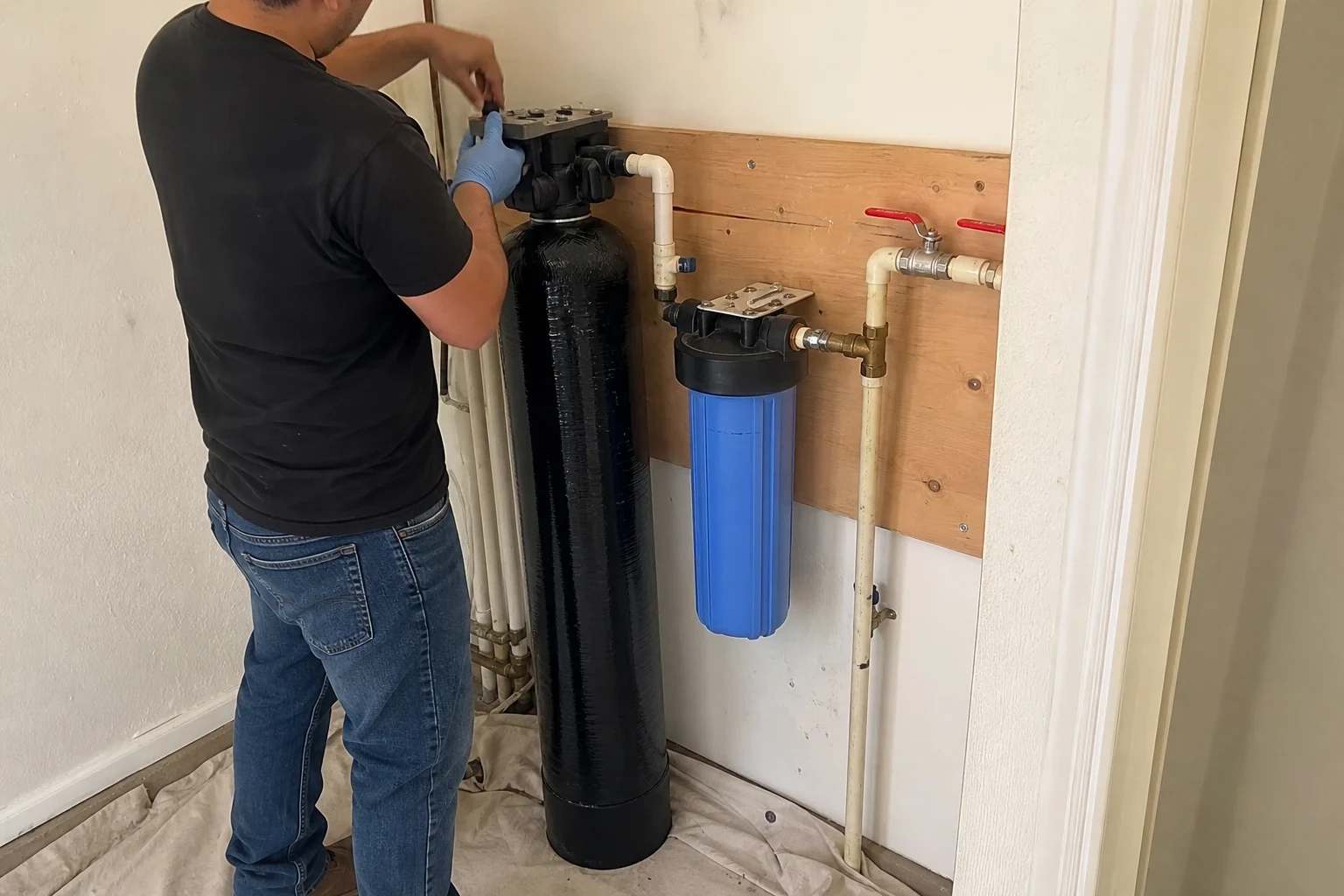
ServicesWhole-house carbon filtration
Whole-House Carbon Filtration in Garland
We install whole-house carbon filters that take the chlorine taste and smell out of every tap, from the kitchen sink to the shower. In older homes we check the main line, the shutoff valve and any past repairs first, so the system fits the plumbing you actually have.
What a whole-house carbon system does, and what it doesn't
City water is disinfected before it reaches you, and that is a good thing. What lingers is the taste and smell of chlorine or chloramine. A carbon filter installed where the main line enters your home catches it before the water splits off to the fixtures, so showers, laundry, the ice maker and the kitchen tap all get the same treated water.
Carbon is not a softener, and it is not the answer to everything. It won't remove hardness minerals, and it can't help with lead that leaches from old pipes downstream of the filter. If lead is the worry, under-sink reverse osmosis at the kitchen tap is the better tool, and we will tell you so.
Older houses ask for more care at the install point. A galvanized section, a gate valve that hasn't turned in twenty years, or a spot where someone once spliced copper to PEX all change how we plan the work. We look at those before anything else.
What the installation includes
- Media matched to your disinfectant
- Standard carbon handles chlorine well. Chloramine needs catalytic carbon and more contact time, so we confirm which one your water carries before choosing the media.
- A sediment prefilter
- A cartridge ahead of the carbon tank catches rust flakes and grit, which older lines tend to shed. It keeps the carbon bed from clogging early.
- A bypass loop and sound shutoff valves
- We add a bypass so the system can be serviced without cutting water to the whole house. If the main valve is seized or weeping, we replace it while the line is already open.
- Sizing for real use
- We count bathrooms and look at how your household uses water at its busiest, then size the tank so two showers and the washer can run together without a noticeable drop in pressure.
- Protection for garage or outdoor setups
- When the main enters outside, we place and insulate the system so a hard winter freeze doesn't crack a housing or fitting.
- Cleanup and a walkthrough
- We flush the new media, check every joint for drips and leave the area as we found it. Then we show you the bypass and how to tell when the prefilter needs changing.
Signs a whole-house filter makes sense
The tap smells like a pool
A sharp chlorine note in a glass of water, or in the kitchen when the sink runs hot, is the clearest sign. Carbon is very good at removing it.
You filter drinking water but still notice it in the shower
A pitcher or fridge filter only covers what you drink. Steam carries chlorine smell, so a bathroom can still smell treated.
Small filters can't keep up
If you are swapping pitcher cartridges constantly or buying bottled water for cooking, treating the whole supply once is often simpler.
Plumbing work is already planned
A water heater swap or partial repipe opens the main line anyway. That is the easiest moment to add a carbon system and a proper bypass.
You aren't sure what's in your water
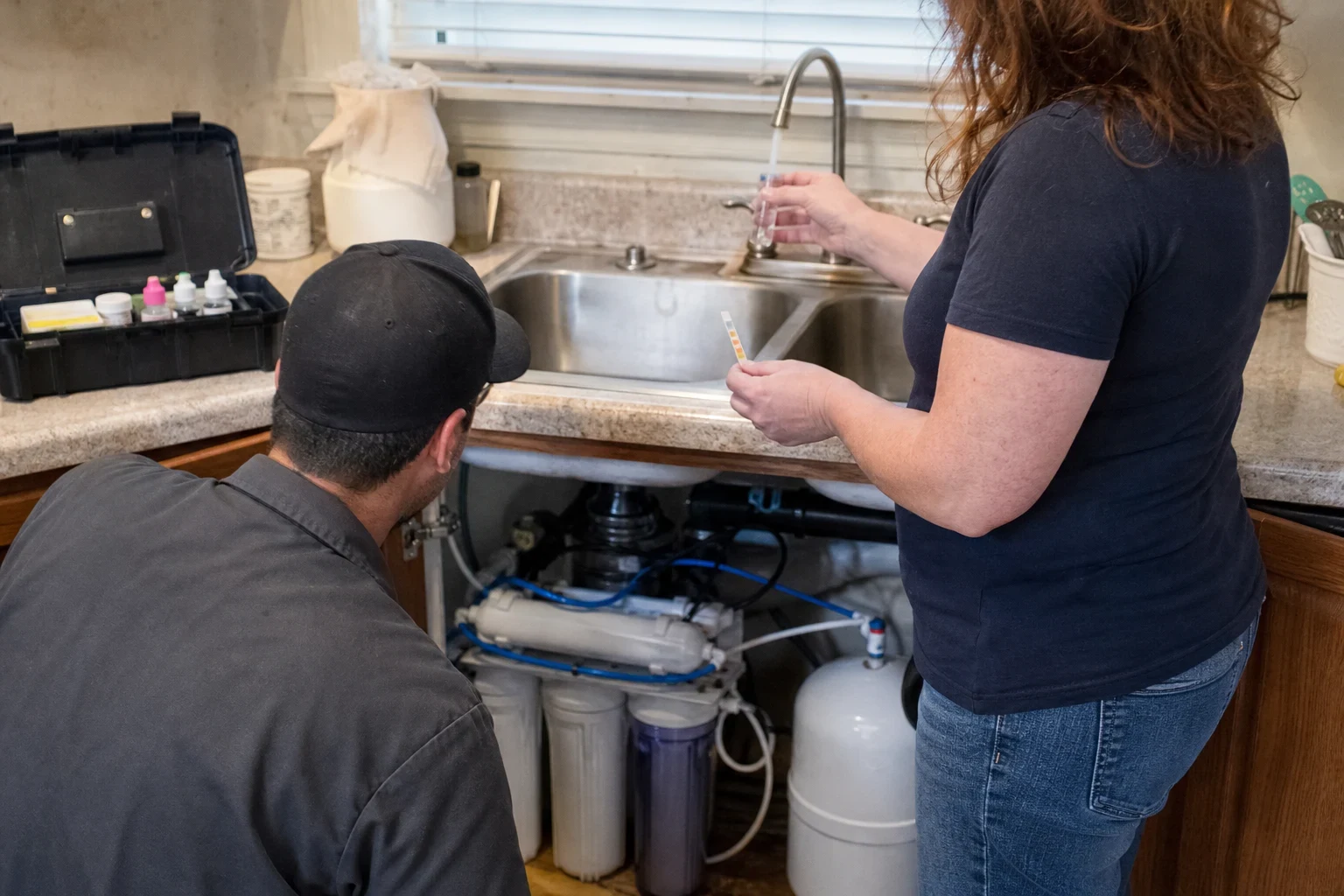
If taste is only part of the question, start with water testing. The results tell us whether carbon alone will do the job.
What moves the price
We price each home after seeing the plumbing, because two houses on the same street can need very different work. You get a written estimate before anything starts, and nothing is added without your say.
Carbon type and tank size
Catalytic carbon for chloramine costs more than standard carbon. Larger households need a bigger tank to keep flow steady.
Condition of the main line
Corroded galvanized pipe, a failing shutoff valve or an old repair that won't hold a new fitting adds parts and time.
Location and access
A roomy garage wall is straightforward. A tight closet, or an outdoor main that needs an insulated enclosure, takes more work.
Prefilters and add-ons
A sediment prefilter is standard with us. Pressure gauges or extra stages for iron change the total.
How the work runs
- 1
A look at your plumbing first
At the estimate visit we check the main line material, the shutoff valve, water pressure and the space available. We take photos of what we find and give you a written estimate with each part and labor line listed.
- 2
Confirming the water
We check for chlorine or chloramine and look at hardness and iron. If rust or sediment is heavy, we may suggest iron and sediment filtration ahead of the carbon so it lasts.
- 3
Install with the house protected
Water is off for a few hours. We lay down drop cloths, cut into the main, and use fittings that match your existing pipe, with dielectric unions where copper meets galvanized steel.
- 4
Flush, test and hand over
We flush the fine carbon dust out of the new media, pressure test every connection and run each fixture. You get a short walkthrough before we leave.
Questions about whole-house carbon
How often does the carbon need replacing?
It depends on how much water your home uses and how strong the disinfectant is. A properly sized tank usually runs for years, while the sediment prefilter needs changing more often. We give you an estimate for your household, and our filter replacement and maintenance service can keep track of it for you.
Will it lower my water pressure?
A system sized for your flow should not cause a drop you notice. Undersized tanks and clogged prefilters are what usually cause trouble, which is why we size for peak use and show you how to check the prefilter.
Does a carbon filter remove lead?
A whole-house carbon system is not the right tool for lead. In older homes, lead tends to come from solder or fixtures after the filter. For drinking and cooking water, we recommend under-sink reverse osmosis at the kitchen tap.
Do I need a softener as well?
Not unless a hardness test shows it. Carbon does nothing for hardness, but plenty of homes don't need a softener at all. We only suggest one after testing.
My house still has some galvanized pipe. Can you install one?
Usually, yes. We inspect the section near the install point, and if it is badly corroded we replace a short run so the new connections hold. We'll point out anything else we see in photos so you can plan for it.
Does the system waste water?
Some tank designs backwash and send water to a drain. Others run upflow without backwashing. We explain both and pick based on your drain access and water use.
Start with a look at your main line
We'll check your pipes, valve and water, then give you a written estimate with nothing hidden. If carbon isn't the right fit for your home, we'll tell you what is.