ServicesWater softeners
Water Softeners in Garland, After a Hardness Test
We install a water softener only when a hardness test at your tap says it will help. In older homes we also check the pipes, past repairs and the water heater first, so the softener suits the house you have and does the job you paid for.
A softener solves one problem: hard water
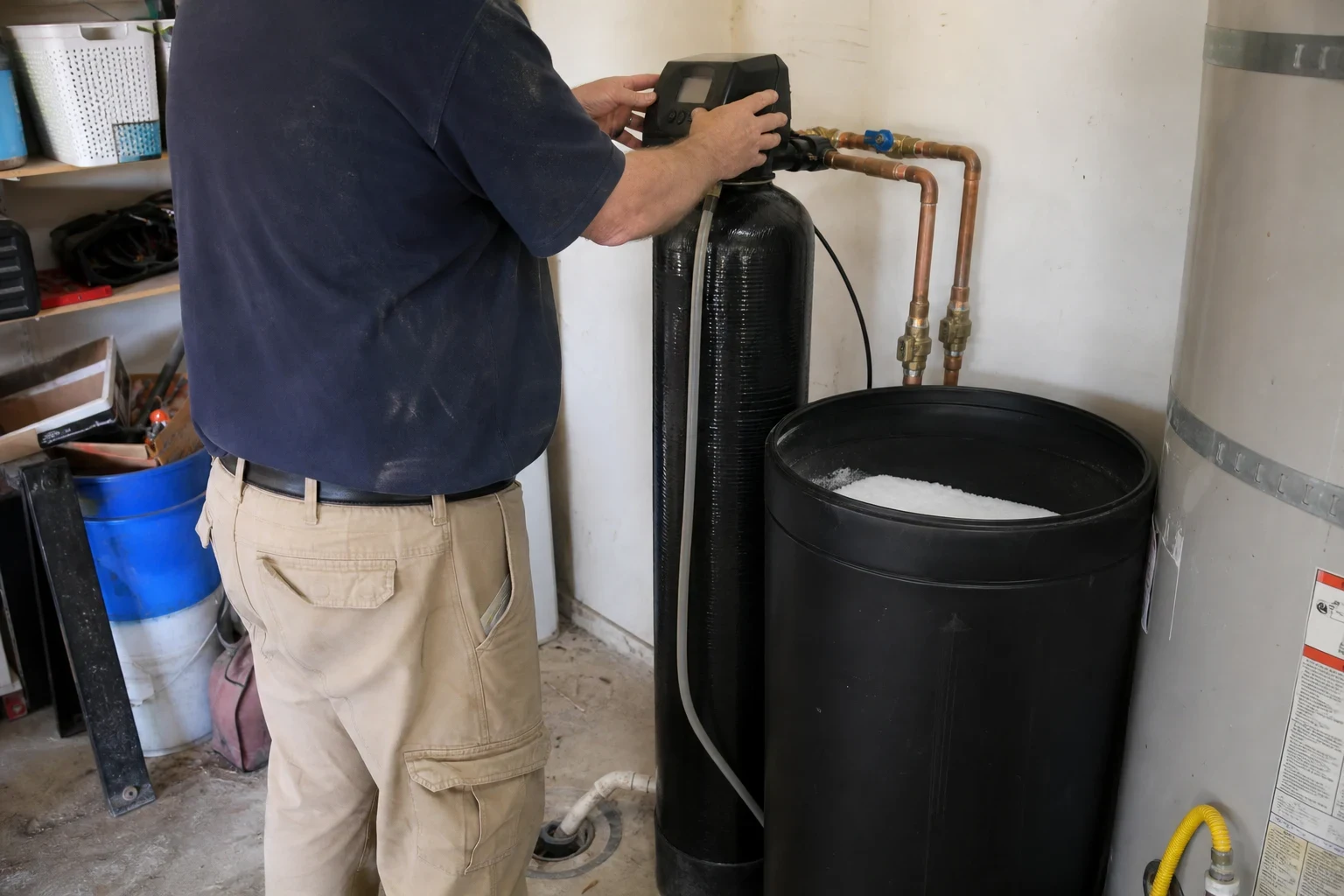
A water softener trades calcium and magnesium for sodium or potassium as water passes through a tank of resin beads. That stops scale on fixtures, inside the water heater and in the dishwasher. It does nothing for chlorine taste, sediment or lead, and it is a poor use of money if your water is only mildly hard.
So we test before we quote. We measure hardness in grains per gallon at your kitchen tap and check for iron, because iron coats softener resin and shortens its life. If the numbers are low, we say so plainly and point you toward whole-house carbon filtration or under-sink reverse osmosis when taste or drinking water is the real concern.
Older houses raise their own questions. Galvanized lines shed rust and scale that can look like a hardness problem when it is not. A previous owner's softener may still be plumbed in with a valve that stopped working years ago. We sort out which is which before anything new goes in.
What comes with a softener install
Hardness and iron tested in your home
We run the test at your tap while you watch and walk you through the result in everyday language. If anything looks off, we can suggest a more complete lab panel through our water testing service.
Sized for the people in your home
We base grain capacity on your hardness reading, how many people live there and your number of bathrooms. A tank that's too big burns extra salt and water when it regenerates. One that's too small runs dry partway through the evening.
Checking the main line
We look at where the water comes in, what the pipe is made of, the condition of any old shutoffs and whether there's a drain and outlet close by. In older homes a new shutoff or a short length of new pipe is often needed so the softener ties into solid material instead of a corroded fitting.
A bypass and sound connections
Each install includes a bypass, so the softener can be shut out of the line while the rest of the house keeps its water. Where copper joins galvanized steel, dielectric unions go in to slow corrosion at that joint.
Old equipment taken out
When an unused softener or a worn cartridge housing is still connected, we take it off the line, cap or reroute the pipes and cart it away.
Setup and a walkthrough
We set the regeneration schedule around your water use, fill the brine tank and show you how to check the salt. You'll understand what the unit is doing and when it needs you.
Signs your home may have hard water
White crust on faucets
Chalky buildup around aerators and shower heads that returns soon after cleaning is the classic sign of calcium in the water.
Spotted glassware
Cloudy film on glasses straight out of the dishwasher, even with rinse aid, usually points to minerals rather than detergent.
A rumbling water heater
Popping or rumbling from the tank often means scale and sediment have settled at the bottom. In an older heater it can also mean the tank is near the end of its life, which we will tell you honestly.
Soap that will not lather
Shampoo that takes extra to foam, stiff towels and dry skin after a shower can all come from hard water.
An old softener nobody has serviced
Many older homes came with a softener of unknown age. If the salt never goes down or the timer is blank, it is probably doing nothing, and a test will show whether you need a replacement at all.
How the work goes, from test to install day
- 1
Test and walk-through
We test hardness and iron at the tap, then look at the main line, the water heater and the space where a softener would sit. You see the readings as we take them.
- 2
A written recommendation
If a softener makes sense, you get a line-item estimate covering the unit, any plumbing repairs and removal of old equipment. If it does not, we tell you why and what would help instead.
- 3
Install day
We shut off the water, lay drop cloths and protect the floor around the work area. We cut in the softener and bypass, connect the drain line, load the resin and flush the system before checking every joint for leaks.
- 4
Retest and handover
Once the softener has run, we test the water at your tap again to confirm the hardness has dropped. Then we set the schedule, clean up and walk you through basic care.
What moves the cost of a water softener
The softener itself is only part of the price. In an older home, the condition of the pipe where it connects can matter as much as the unit you choose. Your estimate lists each part separately so you can see where the money goes.
- Hardness and household size
- Harder water and more people mean a larger grain capacity, which means a larger resin tank.
- Plumbing at the connection point
- Clean copper or PEX near the main line is simple to work with. Corroded galvanized pipe, failing shutoffs or past patch repairs may need replacing before the softener goes in.
- Location and access
- A garage with a nearby drain and outlet keeps labor down. An outdoor install needs protection from summer heat and the occasional hard freeze in North Texas, which adds materials.
- Valve type and old equipment
- Metered valves that regenerate based on actual use cost more than timer valves but save salt over time. Removing an existing unit adds a little labor.
Water softener questions
Something not covered here? (972) 646-8233
Does my home in Garland actually need a softener?
We cannot say until we test. Hardness varies with your supply and your plumbing, and we do not sell softeners on a general claim about the area. Your reading at the tap decides it, and a low number means we recommend against one.
Will softened water taste salty?
Most people notice little or no change. The amount of sodium added depends on how hard the water was to begin with. If you would rather avoid it, potassium chloride works in place of salt, or an under-sink reverse osmosis system can serve your drinking water.
Can a softener fix rusty water from old pipes?
No. Rust from aging galvanized lines needs iron and sediment filtration or pipe repair, and that rust will foul a softener's resin. We check for iron first so you do not buy the wrong equipment.
How much upkeep does a softener need?
You will add salt every few weeks, depending on use. The resin benefits from an occasional cleaning, and the valve should be checked from time to time. Our filter replacement and maintenance service can handle that on a schedule.
Can you reuse the plumbing from my old softener?
Sometimes. If the bypass and connections are sound and match the new unit, we keep them. If the fittings are corroded or the valve is seized, we replace them rather than build new equipment on a weak joint.
Let the reading decide, not a salesperson
Testing your hardness shows whether your home needs a softener at all. We work in Garland and nearby towns such as Rowlett, Sachse and Richardson.