ServicesFilter replacement
Filter Replacement and Maintenance in Garland
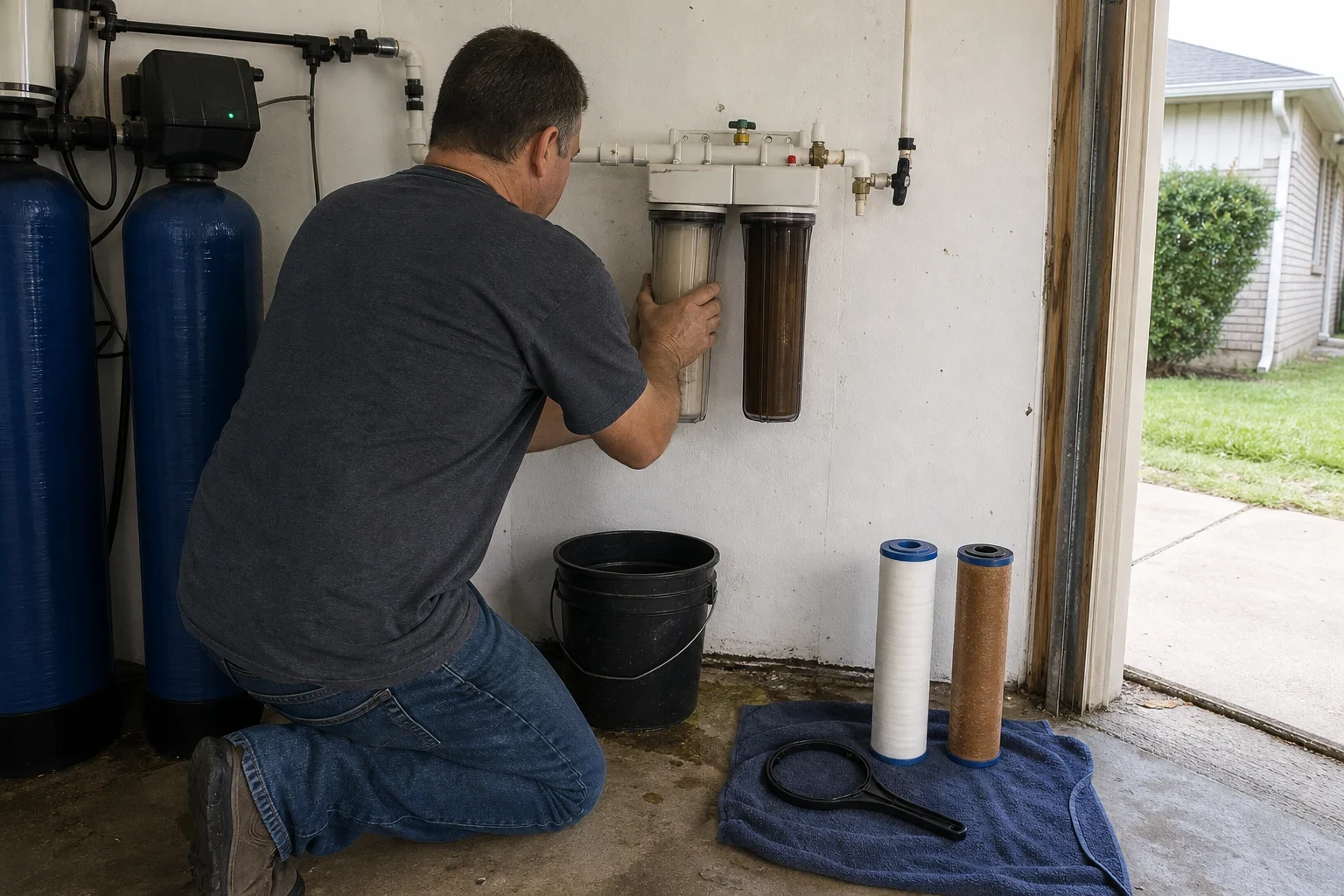
A filter only works while its media has capacity left. We change cartridges and membranes on a sensible schedule, check the valves and fittings around them, and leave your system clean and dated so you know exactly when the next visit makes sense.
Keeping a good system good
Every filter has a working life. Carbon fills its pores with chlorine and organics, sediment cartridges load up with grit, and reverse osmosis membranes slowly foul. When that happens, water still flows, so most people never notice until taste returns, pressure drops or a housing starts to weep.
In older houses the filter is rarely the only thing that needs attention. Shutoff valves that have not been turned in years, a bypass loop added during an earlier repair, or a brass fitting joined to galvanized pipe can all cause trouble during a simple cartridge swap. We look at the whole run, not just the canister, and we tell you what we see before we touch anything.
What we do on a maintenance visit
- 01
New cartridges and media
Sediment, carbon and specialty cartridges are swapped for ones with the right size and micron rating for your housing. If an earlier installer put in the wrong cartridge, we point it out and fix it.
- 02
Service for reverse osmosis units
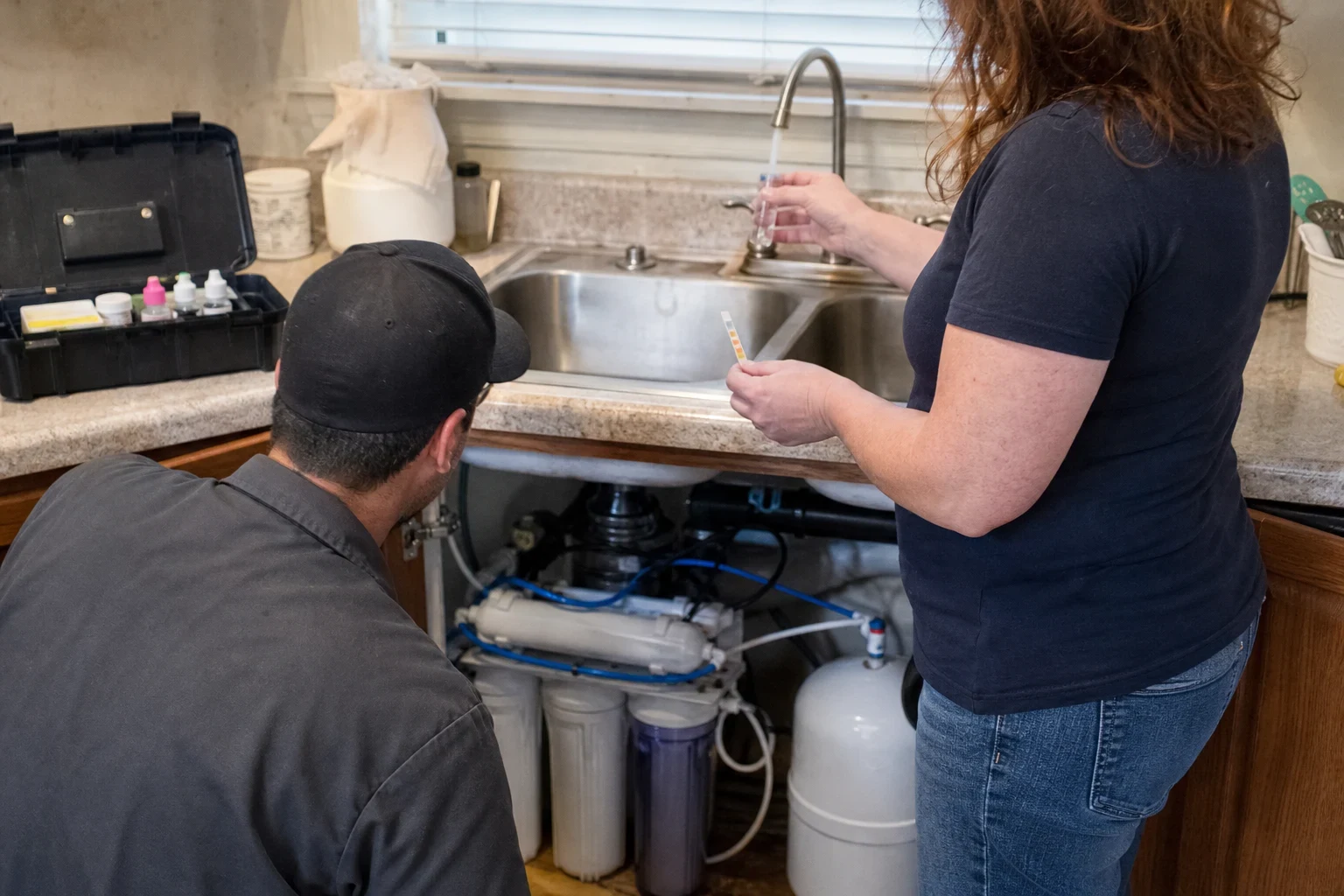
On under-sink reverse osmosis systems we change the pre- and post-filters, measure what the membrane is producing and check the tank pressure. The membrane gets replaced only if the numbers show it needs to be.
- 03
Housing and seal care
We drain and wash every housing and look it over for fine cracks. O-rings are cleaned and given a thin coat of food-grade silicone, or swapped out if they've gone flat or stiff.
- 04
Checking valves and the bypass
The inlet, outlet and bypass valves are tested to confirm they shut completely and don't leak at the stem. Any valve that is stuck or corroded gets flagged so you can decide about it on its own.
- 05
Flushing and leak checks
Once everything is back together, we restore pressure gradually, flush the fresh media to clear out carbon dust, and wait to see every joint stay dry before leaving.
- 06
A record with dates
Every housing gets a label showing when it was changed, plus a brief note on the parts we replaced and anything we spotted, so the following visit picks up where this one ended.
Questions about Filter replacement?
Call(972) 646-8233Signs your filters are overdue
The chlorine taste is back
When carbon is spent, the bleach-like taste and smell return at the tap. It is usually the first and clearest signal.
Lower water pressure
A clogged sediment cartridge restricts flow to the whole house. Showers weaken and the washing machine takes longer to fill.
Slow RO faucet
If the drinking-water faucet trickles or the tank empties after a glass or two, the prefilters or membrane are likely loaded.
Discolored cartridges or housings
A cartridge that has turned dark brown or orange is full, and it may also point to iron or sediment worth looking into with water testing.
You cannot remember the last change
No date on the housing and no record usually means it has been too long. In a house that has changed hands, it often means nobody knows what was installed.
How the visit runs
- 1
A short conversation by phone
You tell us what system you have, if you know, and when it was last serviced. We bring the likely cartridges so the job is done in one trip.
- 2
Protect the work area
We lay down drop cloths and set out a bucket and towels under the housings. Cabinet floors under sinks get extra care, since older particleboard swells easily.
- 3
Shut off, relieve pressure, inspect
We close the valves gently and test that they hold before opening anything. If a valve will not seal, we stop and talk with you instead of forcing it.
- 4
Replace, flush and check
New media goes in, housings are reassembled, and the system is brought back up slowly and flushed. We check every joint for drips and confirm pressure and taste at the tap.
- 5
Clean up and record
Old cartridges leave with us, the area is wiped dry, and each housing gets a dated label along with our notes.
What moves the cost of maintenance
Most visits are straightforward, and we give you the price by phone before we schedule. The total depends mainly on what your system uses and the condition of the plumbing around it. If we find a worn valve or cracked housing, we explain it and quote it separately so nothing gets added without your say.
- Number and type of cartridges
- A single sediment filter costs less to service than a multi-stage system with carbon, specialty media and an RO membrane.
- Membrane condition
- Reverse osmosis membranes last longer than prefilters. Replacing one adds to the visit, so we only do it when output readings show it is needed.
- Proprietary or discontinued parts
- Some older systems use brand-specific cartridges that are harder to source. Where a standard housing would make future changes simpler, we will mention it.
- Valves and fittings
- Seized shutoffs, worn O-rings or corroded fittings from past repairs can add parts and time. We show you what we found before any extra work.
Common questions about filter upkeep
How long do my filters last between changes?
That comes down to the type of cartridge and how much water your household runs through it. Sediment stages usually need swapping most often, carbon somewhat less, and an RO membrane least of all. We build your schedule from the system you have and from how clogged the old cartridges look when they come out.
Will you work on a system someone else put in?
Yes. A lot of the equipment we look after was installed by an earlier homeowner or a different company. On the first visit we figure out the housing type and cartridge sizes and write them down for future service.
My house came with a filter. Should I hang on to it?
In many cases, yes, after new media and an inspection. If the housing has a crack, the parts have been discontinued, or the system doesn't suit your water, we'll say so directly. Water testing can help decide it when the answer isn't obvious.
Why test the valves when you're only changing a cartridge?
In an older home a valve can look sound yet not shut off all the way, or begin dripping at the stem the moment it's turned. Checking first keeps the cabinet from flooding mid-job. If a valve needs replacing, the timing and the choice are yours.
Can you maintain a water softener as well?
Yes, for softeners we recommend after a hardness test. That includes looking at the resin bed and confirming the control valve settings. If yours has an uncommon control head, we'll explain what we're able to service on it and what we aren't.
Put your filters back on schedule
Tell us what system you have and roughly when it was last changed. We will bring the right parts, check the plumbing around it, and leave everything labeled for next time.