ServicesIron and sediment filtration
Iron and Sediment Filtration in Garland
Rust-tinted water, gritty aerators and orange rings in the tub usually point to something in your home's plumbing. We test first, find the source, then fit a sediment or iron filter sized to your home and its pipes, installed with care.
When a sediment or iron filter is the right answer
In older homes, much of the rust and grit we find comes from the house itself. Galvanized steel pipe rusts from the inside out. A water heater tank sheds scale. A past repair or a main break down the street leaves loose debris in the lines. Sediment and iron filtration catches that material where water enters your home, before it reaches fixtures, appliances and laundry.
We don't fit a filter to a guess. A short test tells us whether the staining is dissolved iron, rust particles, sand or scale, and that decides the equipment. Sometimes the honest answer is that a corroded pipe section or a tired water heater is the real problem, and we will tell you so.
If chlorine taste turns out to be your main complaint, whole-house carbon filtration may suit you better, and the two can share one installation.
What the work includes
- 01
A water test before any quote
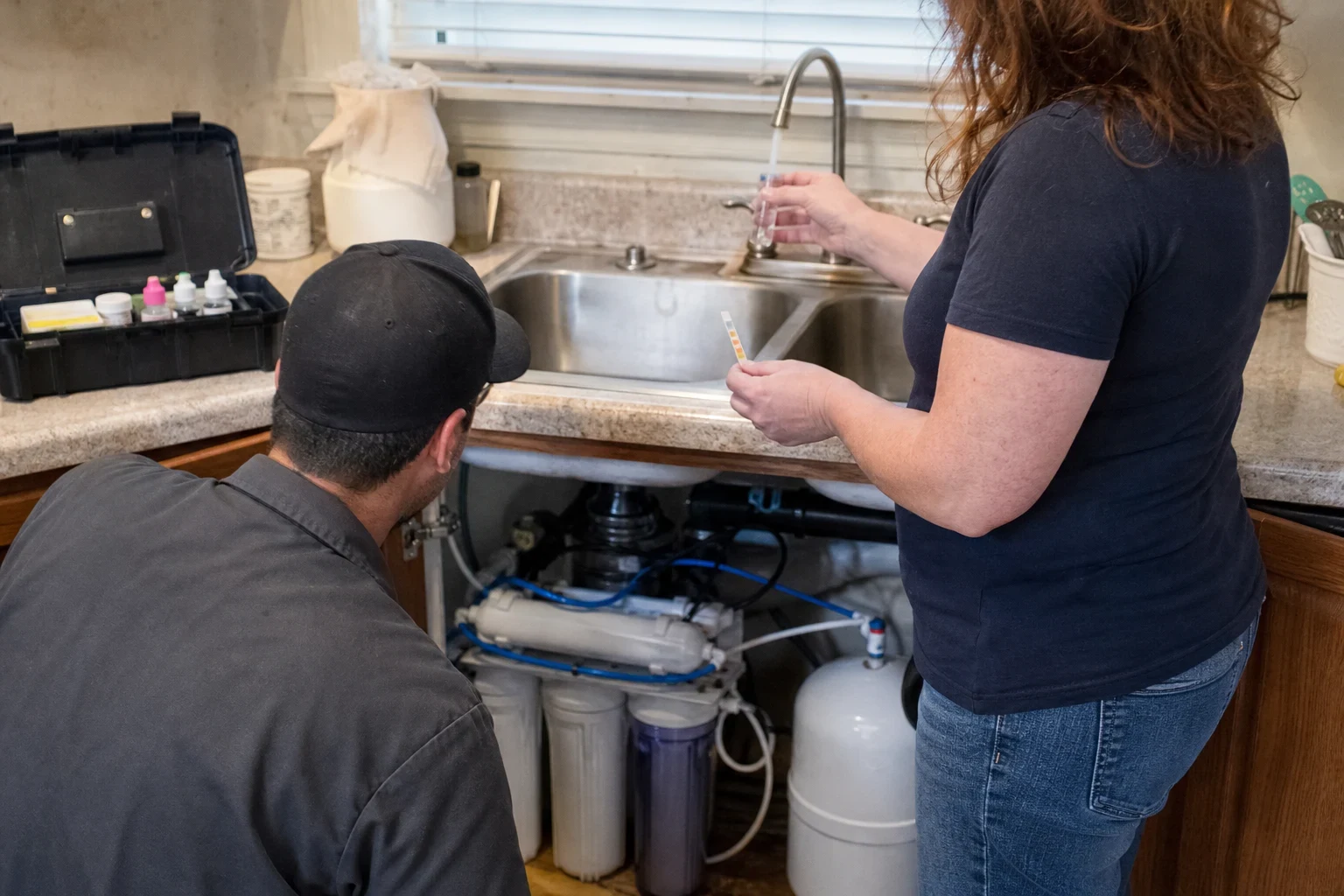
We check iron, turbidity and hardness at your tap and look at what has collected in an aerator screen. You see the results alongside us.
- 02
Pipe and entry inspection
We look at where the main enters, the type of pipe, signs of old patches or mixed metals, and how much room there is for a housing. Older homes often hide a surprise or two here.
- 03
Equipment matched to the problem
Spin-down screens for sand and grit, pleated or spun cartridges for fine sediment, and oxidizing media filters for dissolved iron. We explain why one fits your water and another doesn't.
- 04
Bypass valve and shutoffs
Every system goes in with a bypass, so water keeps running during cartridge changes or service.
- 05
A clean, tidy installation
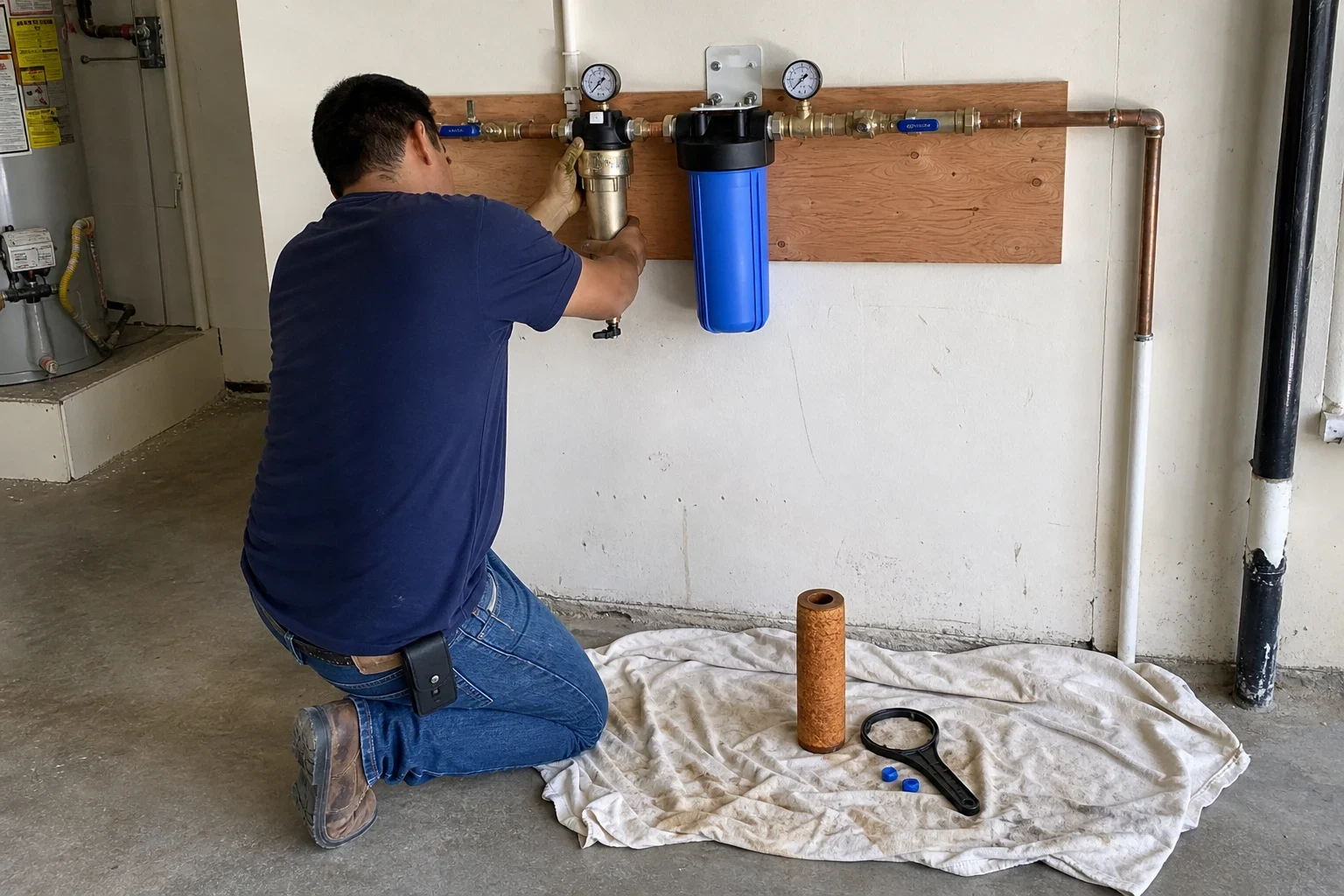
Drop cloths down, straight pipe runs, properly supported housings and a flush of the new lines before we leave. Old fittings and packaging leave with us.
- 06
A plain maintenance plan
You'll know which cartridge to use, roughly when, and what a clogged filter looks like. Our filter replacement and maintenance service can handle it for you.
Questions about Iron and sediment filtration?
Call(972) 646-8233Signs your water needs iron or sediment filtration
Orange or brown stains
Rings in toilet bowls, streaks below shower heads and rusty spots on white laundry. Iron oxidizes when it meets air and leaves that color behind.
Grit in aerators and screens
Sandy flecks or black specks clog faucet aerators and washing machine inlet screens. This is often loose scale or pipe debris.
Tinted water after it sits
The first draw in the morning, or after a trip away, runs discolored and then clears. That pattern is common with galvanized supply lines.
Worn valves and short appliance life
Sediment chews through faucet cartridges, toilet fill valves and the small solenoids in dishwashers and ice makers.
Cloudiness after plumbing work
A line repair, a new water heater or utility work nearby can stir up material that keeps showing up for weeks.
How an installation day runs
- 1
Test and talk it through
We test, show you what we found and give you a written line-item estimate. There is no pressure to decide that day.
- 2
Prepare the space
We protect floors and walls near the entry point, shut off the main and drain the lines.
- 3
Install and connect
Housings are mounted on a solid surface and cut in with fittings suited to your pipe. Where old galvanized meets new pipe, we use proper dielectric fittings so the joint doesn't corrode. Pressure gauges go in where they help you spot a clogged cartridge.
- 4
Flush, check and clean up
We flush the system, check every joint under pressure, retest the water and leave the area as we found it.
What moves the price
Cost depends on what is in your water and how your home is plumbed. After testing, we give you a written estimate that lists equipment, parts and labor separately. Two homes on the same street can need very different setups, so we price from what we actually find.
- What you are filtering
- Sand and grit need a simple screen or cartridge. Dissolved iron needs oxidizing media and a larger tank, which costs more.
- Flow and home size
- More bathrooms and higher demand call for larger housings so pressure stays strong at every tap.
- Condition of existing pipe
- Badly corroded galvanized near the entry point may need replacing before a filter can be mounted securely.
- Access and location
- An open garage wall is quicker than a cramped closet. An outdoor entry needs insulation against Garland's occasional hard freezes.
- Ongoing cartridges
- Fine filters on a heavy sediment load need changing more often. We show you the trade-off between cartridge cost and housing size.
Questions about iron and sediment filters
Is the rust coming from the city water or my own pipes?
In older homes it is often the plumbing. We compare water from the outside hose bib near the meter with water from an inside tap. If the outside sample is clean and the inside one isn't, the source is in your home.
Will a filter lower my water pressure?
A properly sized system causes very little pressure drop. A clogged cartridge will, which is why we add gauges where they help. When the needle falls, it's time for a change.
Do I need a water softener as well?
Only if a hardness test supports it. An iron or sediment filter and a softener do different jobs. Our page on water softeners (after hardness test) explains how we decide.
How often will cartridges need changing?
It depends on how much material your water carries. We check the first cartridge after it has been in service a while and set a schedule from what it shows, rather than picking a number in advance.
Should I replace my galvanized pipes instead?
A filter treats the symptoms and protects your fixtures. Replacing badly corroded pipe addresses the cause, and that is work for a plumber. We'll tell you plainly which situation you're in, and a filter can protect your home in the meantime.
Does sediment filtration work with reverse osmosis?
Yes. A sediment stage upstream protects an under-sink reverse osmosis membrane from clogging and helps it last.
Find out what's staining your water
A short test tells us whether it's iron, grit or scale, and where it's coming from. You get a clear recommendation and a written estimate.