ServicesUnder-sink reverse osmosis
Under-Sink Reverse Osmosis in Garland
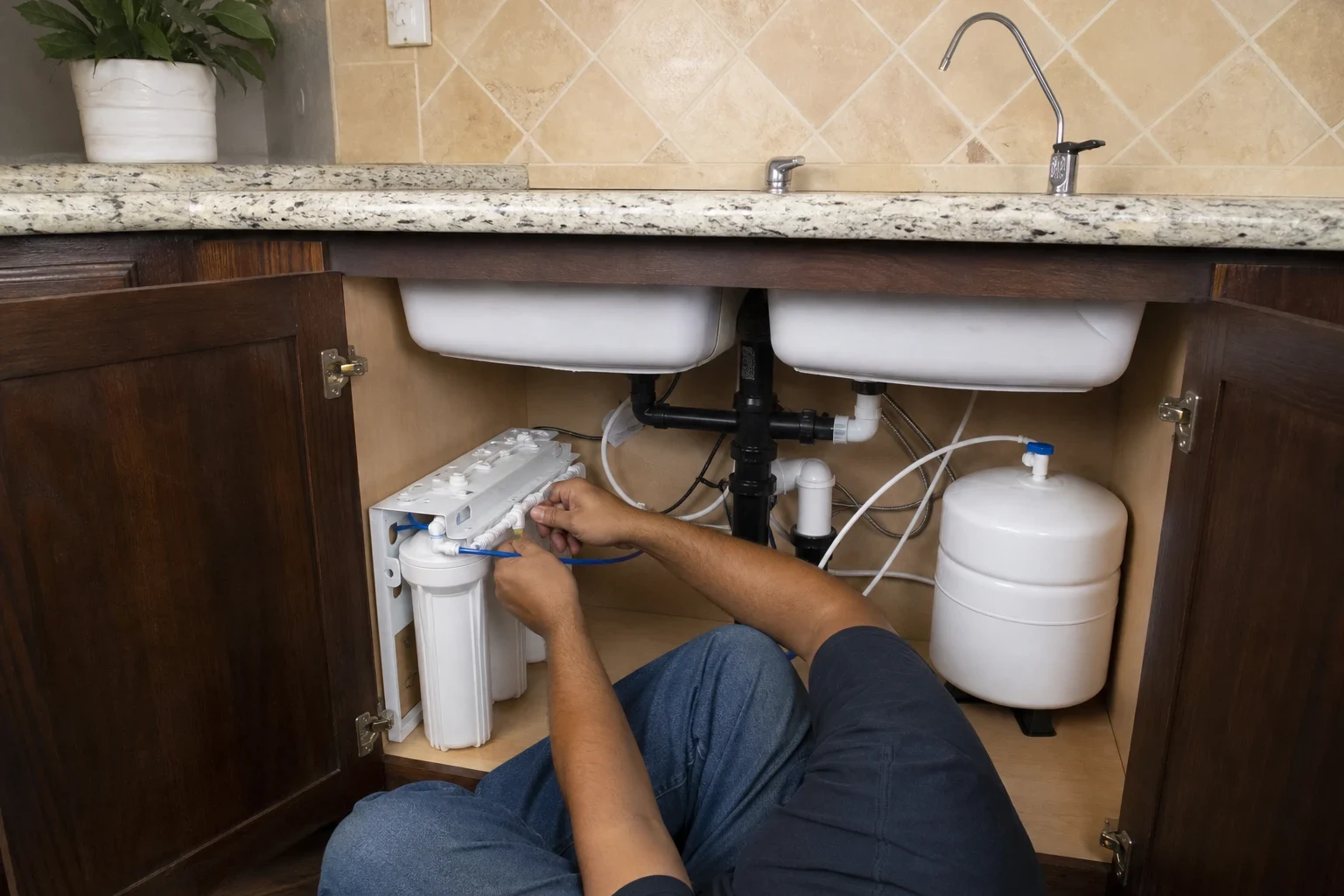
We install reverse osmosis systems under the kitchen sink so you have a dedicated faucet for drinking and cooking water. Before anything goes in, we check the shutoff valve, drain line and water pressure, because in an older house those parts decide how well the system works.
What reverse osmosis does, and when it makes sense
Reverse osmosis pushes water through a very fine membrane after it passes a sediment filter and a carbon stage. What comes out the small faucet beside your main tap is water with far less dissolved material, including lead, many salts and the chlorine taste that carbon alone does not always remove. It treats only the water you drink and cook with, which is why it fits neatly under one cabinet.
It is often the right call when you are not sure what the pipes and solder behind the walls are made of. Homes plumbed before the mid-1980s may have lead solder at the joints, and past repairs can leave a mix of copper, galvanized steel and plastic. City water can leave the plant in good shape and still pick things up on the way to your glass.
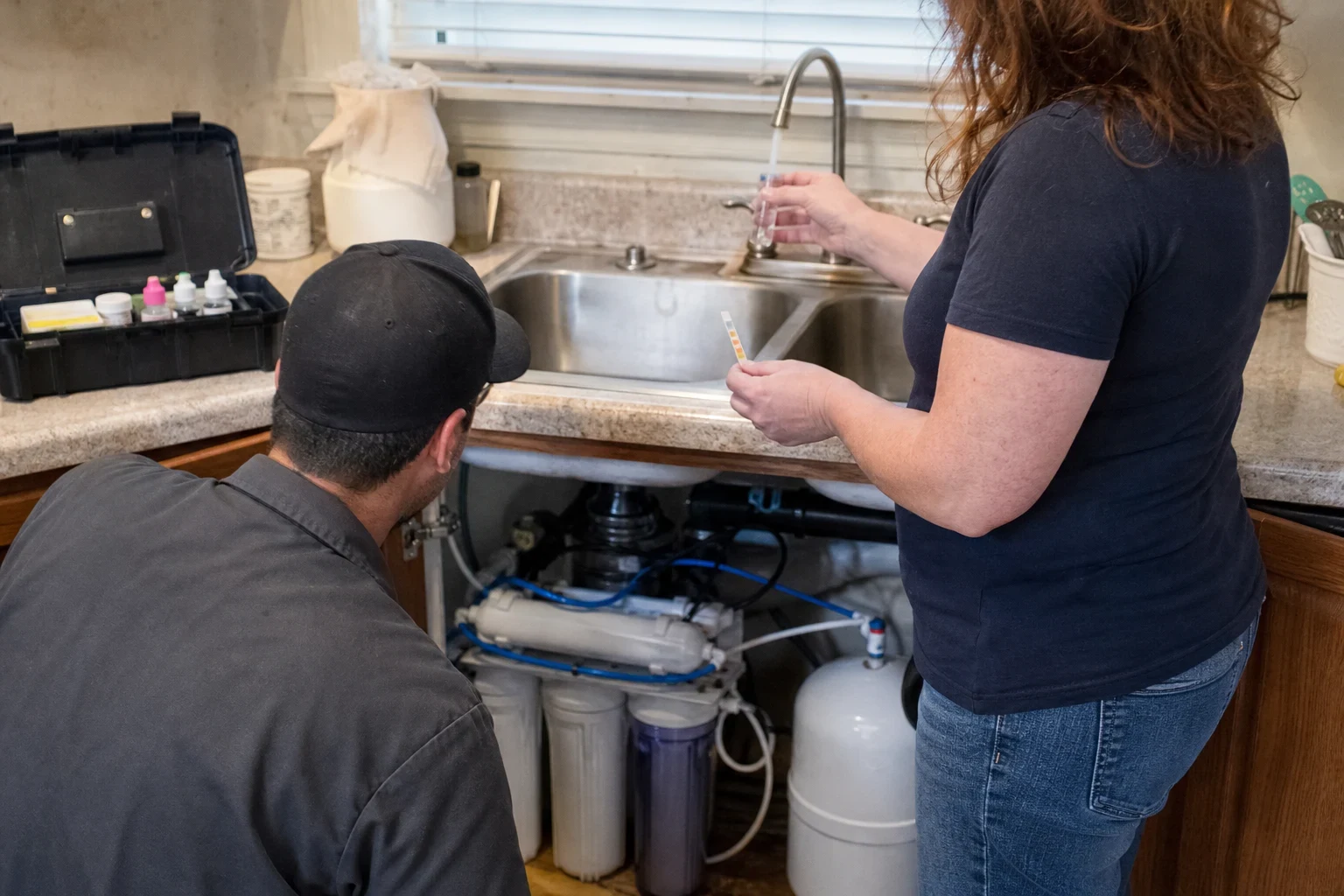
If you have not tested yet, we usually suggest water testing first. Sometimes the answer is reverse osmosis. Sometimes whole-house carbon filtration covers the real complaint, and we will tell you so.
What the installation includes
- Valve and supply check
- We inspect the cold-water angle stop under the sink. Old multi-turn valves often seize or weep once disturbed, so if yours is worn we will show you and replace it before connecting anything.
- Drain connection done properly
- The system sends a small stream of reject water to the drain through a saddle fitting. We look at the condition of the drain pipe first, since brittle or corroded drain lines need a gentler approach or a new section.
- Dedicated faucet and countertop work
- We use an existing sprayer hole when there is one. If we need to drill granite, quartz or a worn laminate top, we explain the method and protect the surface before we start.
- Pressure test and tank setup
- Reverse osmosis needs steady pressure to work well. We measure it, set the storage tank, and tell you plainly if a booster pump would help in your home.
- Optional icemaker line
- If your refrigerator is nearby, we can run filtered water to the icemaker and door dispenser.
- Cleanup and walkthrough
- We flush the system, check every fitting for drips, wipe out the cabinet and show you how the filters come out.
Signs an under-sink system is worth a look
You buy bottled water out of habit
If nobody in the house drinks from the tap, a dedicated faucet usually changes that within a week.
The house has original plumbing
Copper with lead solder or galvanized pipe is a common reason people want extra treatment at the point of use.
A test showed lead or high dissolved solids
Reverse osmosis is one of the more reliable ways to reduce both at the kitchen tap.
Coffee, tea or ice tastes off
A flat, chemical or mineral taste often clears up once the water goes through carbon and a membrane.
A pitcher filter is not keeping up
Pitchers are slow and easy to forget. An under-sink unit filters as you draw water.
What affects the price
We quote after seeing the sink, because two kitchens that look alike can need very different prep work. The system itself is only part of the cost. Older plumbing is usually where the difference comes from.
System type
A standard tank system, a tankless unit or a model with a remineralizing stage each carry a different price.
Valve and drain condition
Replacing a corroded angle stop or a cracked drain section adds parts and time.
Countertop material
Drilling stone takes more care and tooling than using an existing hole.
Water pressure
Low pressure may call for a booster pump so the system fills properly.
Extra connections
Running a line to the refrigerator adds tubing and labor based on the distance.
How the visit runs
- 1
A look under the sink
We start by checking the valve, the drain, the cabinet space and the water pressure. In an older kitchen this is where hidden issues usually show up.
- 2
A written estimate
You get a line-item estimate covering the system and any valve or drain work it needs. We do not add to it once we begin unless you approve a change.
- 3
Installation
We lay down a mat, shut off the water at the sink, mount the filter housing and tank, and connect the supply, drain and faucet. Most of the work stays inside the cabinet.
- 4
Flush and handoff
The first tank of water is flushed to rinse the new membrane. We then check for leaks and leave you with a simple filter schedule.
Reverse osmosis questions we hear
Is there room for it under my sink?
In most kitchens it sits next to the garbage disposal with space to spare. Cabinets in older homes can be shallow or cluttered with old repairs, so we take measurements on the first visit. When room is short, a tankless model can work.
Does a reverse osmosis system send water down the drain?
It does; a portion flows to the drain to flush away what the membrane holds back. Newer systems use less than older ones did. For any model we suggest, we'll explain its ratio.
When do the filters get changed?
Prefilters typically need replacing every six to twelve months, while the membrane lasts longer, often a few years, depending on your water. Our filter replacement and maintenance service can take care of it on a set schedule.
Will it take out minerals I'd like to keep?
It strips most dissolved minerals along with the unwanted material. For most people, food supplies the bulk of their minerals. If you like the taste of mineralized water, a remineralizing stage puts a little calcium and magnesium back in.
Should I have my water tested beforehand?
You don't have to, but we suggest it, particularly in an older home. Testing shows whether reverse osmosis is the right fit or another option would serve you better.
Clean drinking water from your own faucet
We will check your valve, drain and pressure, then give you a written estimate before any work starts. We serve Garland and nearby towns including Rowlett, Sachse and Richardson.